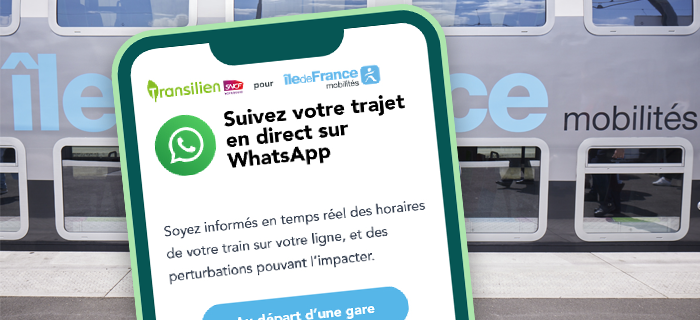
Journey Alerts launches in Paris, bringing real-time transport alerts to SNCF Transilien passengers
Updates


A self-defeating cycle has taken hold in UK rail

A self-defeating cycle has taken hold in UK rail. Operators invest heavily in branded apps, achieve minimal uptake, and respond not by reconsidering their approach but by declining to engage with third-party tools that passengers actually use. The passenger, finding the operator's channel inadequate, turns elsewhere – and that elsewhere is almost invariably Trainline, a private ticket retailer that a significant proportion of the travelling public mistakenly believes is a government or National Rail service.
To be fair to Trainline, it is not the problem when it comes to selling tickets. Passengers use it because it works – the interface is good, the process is straightforward, and there is nothing wrong with buying a ticket from a third-party retailer. There is also still a reasonable case for passengers buying directly from operators through their own apps. The problem starts when a ticket retailer expands into passenger information and disruption services, as Trainline has recently done. Its new features around delay repay, live journey updates and service alerts may seem impressive at first glance, but the underlying information is poor, particularly during disruption, which is precisely when passengers need it most. Station staff report passengers arriving with inaccurate Trainline information and refusing to believe the correct advice being given to them face to face. When a ticket app becomes someone's trusted source of operational information, and that information is wrong, the consequences play out on platforms and at ticket barriers every day.
The scale of the app problem is not in dispute. Research from Deutsche Bahn suggests fewer than one in ten regular travellers will consider using an operator's own app. Globally, more than 90% of app users abandon an app within 30 days of downloading it, according to Business of Apps. Statista puts the figure for operator apps more starkly still: 77% are deleted within three days. Yet operators continue to direct significant resources toward building and protecting these products, and in some cases actively blocking third-party alternatives that passengers demonstrably prefer. Operators may have a role to play in selling tickets through their apps but the app-first approach to passenger information is a different proposition entirely, and it is here that the strategy has most clearly failed.
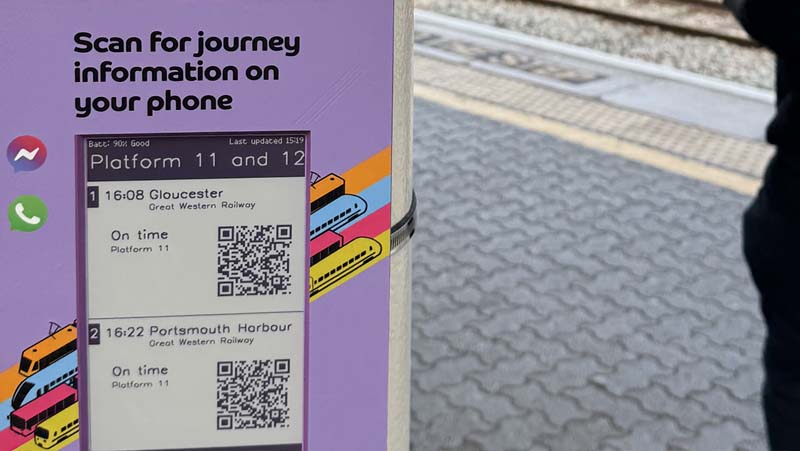
Chiltern Railways is a good example of those that have declined to work with platforms such as Journey Alerts to improve the passenger experience, going as far as blocking Journey Alerts from paid advertising on their trains and stations in an attempt to protect their app and stop their passengers receiving personalised updates that their app can’t provide’ The consequences of that position flow logically from the data: passengers who find the operator's channel inadequate do not stop travelling, they find another route to the information. Once they rely on Trainline for journey updates, the operator loses direct communication with them entirely. If the service is delayed, there is no reliable mechanism to reach that passenger.
Trainline, which is under no obligation to protect the operator's relationship with that customer, benefits from every failure of the operator's own channels. In protecting their own digital ecosystems, operators are not merely losing ground, they are actively pushing their own customers toward an intermediary whose information they cannot control.
The problem is compounded by the nature of the UK's fragmented transport network, in which dozens of operators each run their own set of digital tools. A passenger making a simple journey by bus and train may need two separate apps, two accounts, and two entirely different interfaces. This is not a system designed around the customer. According to Ofcom's Online Nations Report 2025, WhatsApp is used by 90% of UK online adults, and 74% open it every single day. Messenger, meanwhile, is part of a platform used by 93% of online adults. The audience for messaging-based transport information is not a niche, it is effectively the entire travelling public.
The case for a different approach goes beyond convenience. Research by Brunel University suggests 67% of people experience some level of anxiety while using public transport. The Motability Foundation identified 14 million disabled people as a significantly underserved customer base in 2022, noting that many would travel more frequently if barriers were removed. The National Centre for Accessible Transport's 2024 report found that 92% of disabled people in the UK face barriers on at least one mode of transport, and 79% travel less often as a result. For elderly travellers, people with hidden disabilities, those without smartphones, or those unable to afford large data packages, an app-first approach to transport information is not merely inconvenient, it is exclusionary.
LNER's passenger information service, LNER Assistant – built on Journey Alerts' platform – is widely recognised across the industry as one of the strongest examples of how to deliver real-time information to passengers. It works because the operator chose to work with a company that specialises in passenger information rather than attempting to build the capability in-house. South Western Railway and East Midlands Railway have taken a similar approach, delivering journey information through WhatsApp, SMS, and Messenger, with no download, no registration, and no data harvested beyond what is necessary to deliver the service. Journey Alerts, which has operated in the UK market since 2015 and now serves 1.5 million users, reports a 98% retention rate across those deployments – against the 77% three-day deletion rate for operator apps. During disruption, sign-ups increase by 400%.
The technology exists to improve journeys and the audience is already there. A main barrier standing between UK passengers and better information is the industry's willingness to stop investing in tools that its own customers have already abandoned.