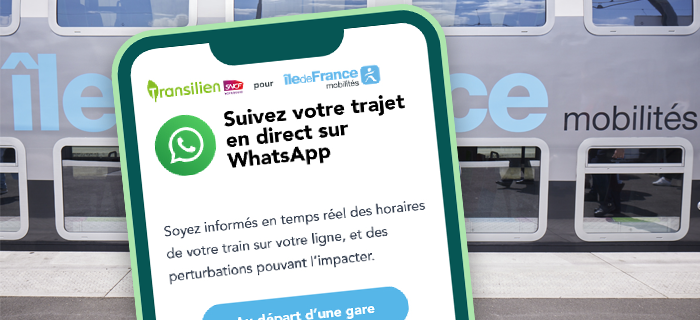
Journey Alerts launches in Paris, bringing real-time transport alerts to SNCF Transilien passengers
Updates


Public transport should be easy for everyone
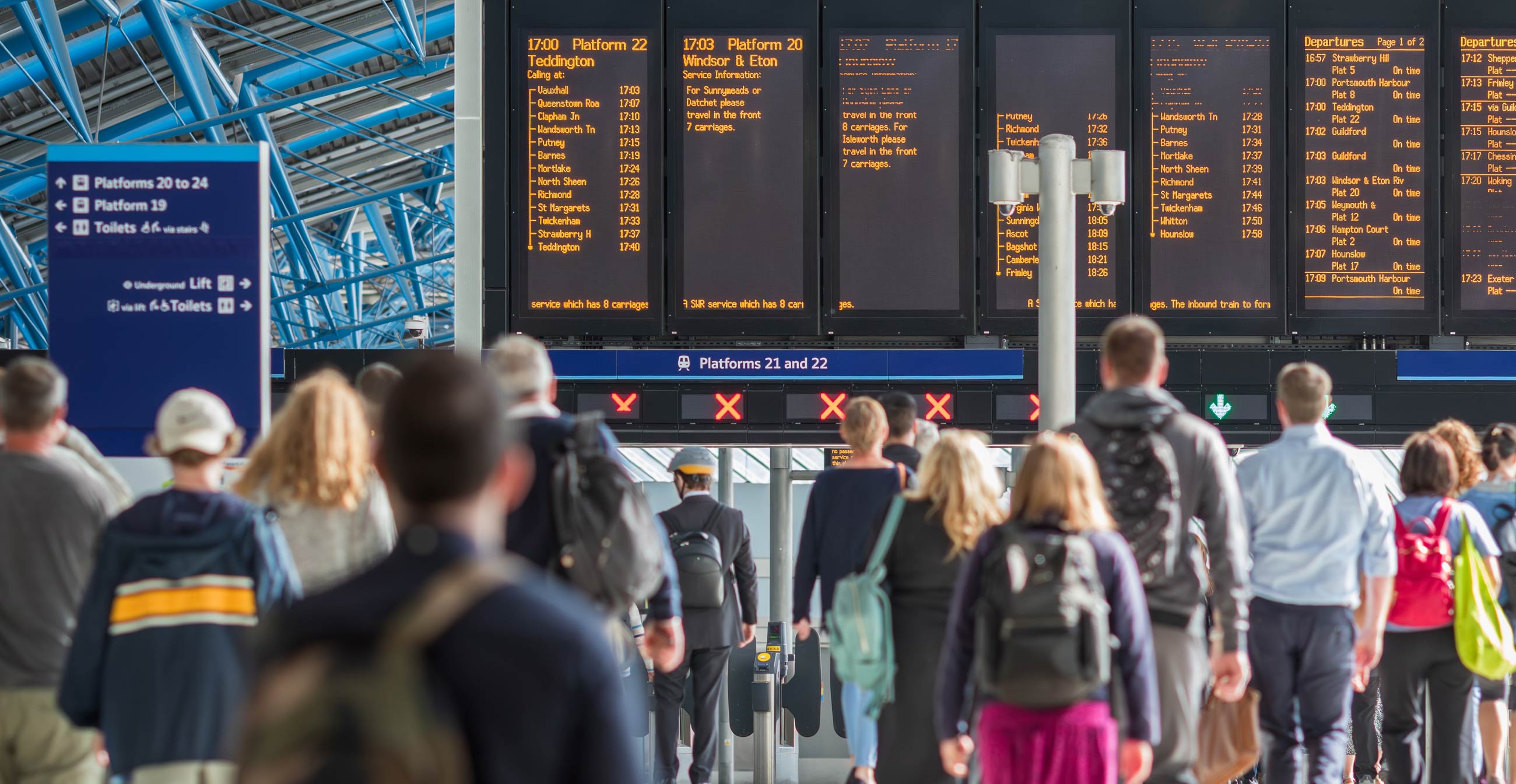
Public transport should be straight forward. You check the time, get on, get off, arrive. But for millions of people, the thought of public transport is so anxiety-inducing, they don’t leave the house. Research by Brunel University’s Jisun Kim and Olinkha Gustafson-Pearce suggests that 67% of people experience some level of anxiety while using public transport. For the people who are too anxious to travel by public transport, or are severely restricted in their mobility, the consequences from a delayed train or disruption can be severe.
Better access to information helps, and the transport industry has tried – by building apps. Commuters can download different apps to find out where their bus is, if their train’s delayed or what the latest disruption is on the tube. But needing to consult several different apps just to plan your journey and keep up to date with delays or changes on the way isn’t making transport easier, or more accessible for the public. In many cases, lazy interface design and app fatigue is just making it worse.
Every train operator has an app, and most bus companies have one. Cities have them, regions have them, and journey planners have them too. The result is a cluttered landscape of tools that passengers are expected to download, register for, and navigate.
The data tells us people are opting out of apps. Business of Apps says globally, more than 90% of app users abandon an app within 30 days of downloading it. Many apps require location services that drain batteries, need user registration, exploit personal data or require constant access to costly bandwidth and data.
Furthermore, the UK's transport network involves dozens of operators, each running their own set of digital tools. Instead of supporting public access to transport, this fragmentation acts as a barrier. A passenger making a simple journey by bus and train might need two separate apps, two accounts, and two completely different interfaces. The digital experience mirrors the complexity of a big city’s transport network, when it should be simplifying it. This isn't a system designed around the customer, it's designed around the operator.
This system also works against people who can't be expected to have the necessary apps already installed – like tourists. For them, ‘download our app’ isn't a solution, it’s a confusing introduction to a new city.
According to Ofcom's Online Nations Report 2025, WhatsApp is used by 90% of UK online adults, and 74% open it every single day. People don't need convincing to use messaging platforms, they already rely on them. Similar levels of uptake are reported by other channels, such as Viber and Telegram across Europe.
Instead of asking passengers to download yet another app, journey information can be delivered through platforms they already have and use. There’s no download, no registration, no battery-drain and no dependence on a smartphone interface. Just clear, personalised guidance arriving in a message – the same way a friend might send directions.
Ofcom’s report also says the combination of Facebook and Messenger remained the most widely used Meta-owned service – used by 93% ofonline adults in May 2025, averaging 42 minutes a day. WhatsApp continued its upward trend, with 90% of adults using it in May 2025, up from 87% in 2024.
Users aged 65 and over continued to use the fewest apps, averaging 31 in May 2025. Keeping travel information accessible and not excluding significant demographics means sticking to a messaging format and using platforms people already gravitate towards.
Several demographics are isolated when transport information isn’t made accessible. In 2022, the Motability Foundation identified 14 million disabled people as a significantly underserved customer base, noting that many would travel more frequently if barriers were removed.
Since Motability Foundation released that report in 2022, the situation hasn't improved. According to the National Centre for Accessible Transport’s (NCAT) 2024 report Understanding and identifying barriers to accessing transport, 92% of disabled people in the UK face barriers on at least one mode of transport, and 79% travel less often because of the barriers they face. The report also suggests 87% of disabled people say transport barriers have a negative effect on their independence and choices, and 77% say their physical or mental wellbeing is negatively affected.
Liam, a man in his 50s who uses a walking stick,responded to NCAT’s survey and described booking passenger assistance for a train journey. There were no free seats, nobody kept him updated on a 20-minute delay, and the ramp and seating help he'd pre-booked never materialised. He said, “the experience started me off feeling highly anxious”.
For elderly travellers who need simplified, step-by-step guidance, children navigating school journeys, tourists or people new to a city, or people unable to afford large data packages or a smartphone, relying on a complex app interface to get around isn’t feasible or reliable. Data and device poverty means that not everyone in the UK has access to a smartphone, which prevents access to travel apps and routing tools like Google Maps. Cities like London also have millions of commuters who know where they’re going, but they still need to be alerted when something’s gone wrong and where to go if their journey changes.
Travel service Journey Alerts takes the functionality of journey planning tools and delivers simple, step-by-step instructions via messaging. And because messaging is two-way, it can do things a static app can't, including guiding travellers around disruption in real time, sending reminders to get off at the right stop, and letting loved ones follow a journey for peace of mind as part of our ‘buddy’ service.
According to Statista, 30% of people in the UK use a mobility app, but 56% of these people rely on Google Maps. Statista also found 77% of operator apps are deleted after three days. In comparison, Journey Alerts retains 98% of its users, with over 1.4 million people in the UK already using the service. WhatsApp is by far the most popular choice, and eight out of ten users say they feel less stressed when travelling, with 85% reporting better journeys overall.
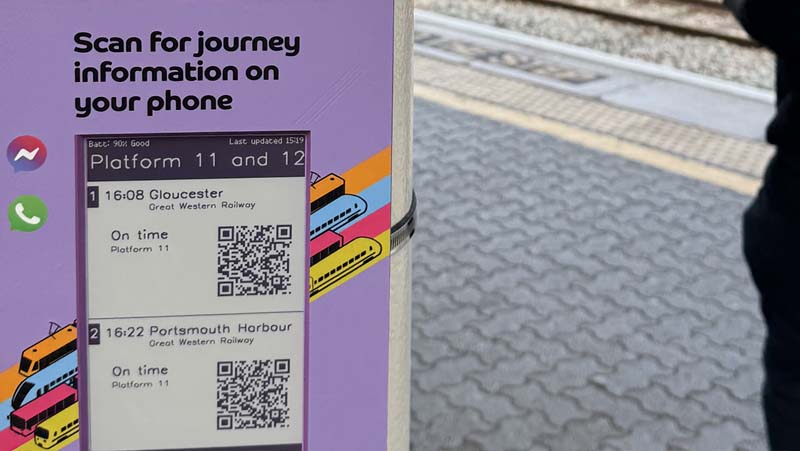
The service is live with partners including LNER, SouthWestern Railway, EMR, and Bedford Borough Council, where QR codes at bus stops connect passengers directly to real-time journey information via WhatsApp. During disruption, sign-ups increase by 400% — because that's exactly when people need clear, trusted guidance the most.
The technology exists, and the audience is already there. There’s no need to share your personal data and there’s instant access at the time of need, without needing to install, download, or register. The messaging is personalised, flexible and reactive, and it doesn’t chew through data or storage space.
Messaging platforms reach more people than any transport app ever will – and they're especially powerful for those who need the most support.