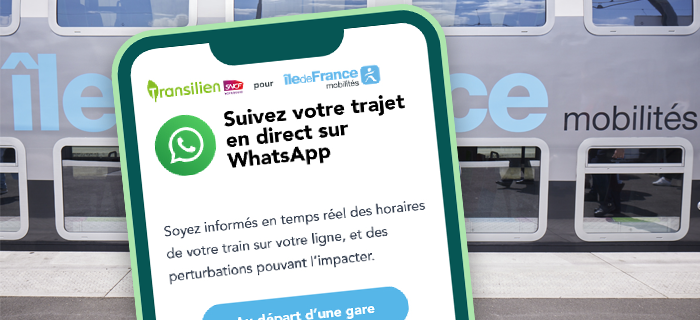
Journey Alerts launches in Paris, bringing real-time transport alerts to SNCF Transilien passengers
Updates


Time to act on identified barriers to public transport
On Global Accessibility Awareness Day, journey information platform Journey Alerts is highlighting the experiences of people with hidden and complex disabilities who continue to be locked out of public transport by cognitive and psychological barriers, as data shows that accessible, personalised journey guidance can remove the barriers keeping these passengers at home.
London, UK, 21 May 2026 – On Global Accessibility Awareness Day, Journey Alerts has released first-hand testimony from an NHS-funded research programme into the barriers faced by people with dementia on public transport. The accounts, drawn from six workshops involving 30 individuals diagnosed with dementia, their carers, clinicians and transport operators, describe a pattern of fear, confusion and withdrawal from public life that has remained largely unaddressed by successive government accessibility strategies.
Tracey, from Folkestone, told researchers: “I get a rising feeling of panic that I might miss my stop or that the doors will suddenly close before I can get off.” Jean, from Blackheath, said: “I would like to take the train but I know I won’t be able to remember all the different parts of a journey to visit my grandson. Now my daughter has to drive three hours to pick me up.”
Violet, from Camden, described avoiding travel altogether: “I find asking for help stressful and embarrassing and I would rather avoid it. I cannot see what number is on the bus or where it is going. I have got on the wrong bus before and ended up miles away from home.”
These experiences are not isolated. Research by the Mental Health Foundation, funded by the Motability Foundation, found that 20% of UK adults struggle to plan a journey on public transport. Parliament’s Transport Committee found that more than half of disabled people had avoided at least one journey in the past month because they anticipated difficulties.
The testimony is published at a point of growing frustration among disability and transport campaigners. In March 2026, MPs debated transport accessibility in the House of Commons, with members asking why, in 2026, disabled people are still fighting for an inclusive and accessible transport network. The government’s integrated transport strategy, published in April 2026 under the title Better Connected, has been criticised by Transport for All for offering “warm words” without a practical pathway to full accessibility. The Accessible Railways Roadmap, published alongside the Railways Bill in November 2025, focuses predominantly on physical infrastructure: lifts, ramps, level boarding, and station design.
For the people quoted in this research, the barrier is not a missing ramp. It is the fear of getting on the wrong train, missing a stop, being stranded somewhere unfamiliar with no clear next step, or facing disruption without knowing what to do. These are information problems, and they require information solutions.
“The people in this research told us exactly what they needed years ago,” says Alex Froom, Chief Strategy Officer at Journey Alerts. “They didn’t ask for a new app or a complicated platform. They asked for someone to tell them, clearly and calmly, what was happening and what to do next. The focus on physical infrastructure is important, but it only addresses part of the problem. For people living with dementia, anxiety, PTSD, autism and other non-visible conditions, the biggest barrier to public transport is often the fear of what might go wrong – and not having the information to deal with it when it does.”
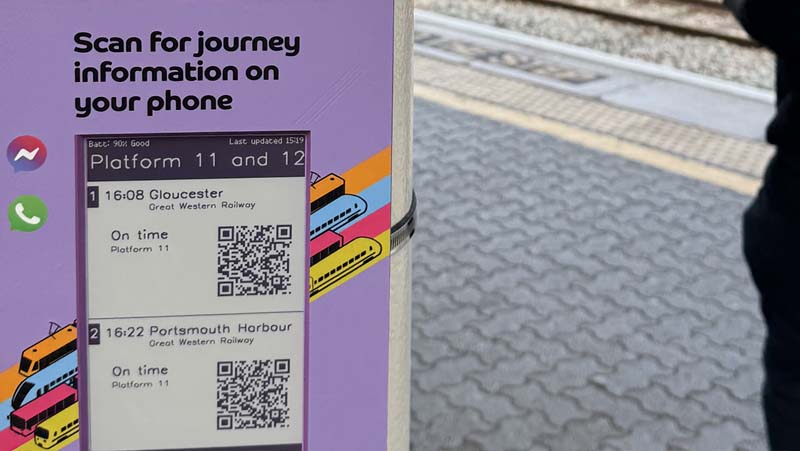
Journey Alerts delivers personalised, step-by-step journey guidance via WhatsApp, Messenger and SMS – platforms already used by 90% of UK online adults, according to Ofcom’s Online Nations Report 2025. There is no app to download, no account to create, and no reliance on sustained mobile data. Passengers receive plain-language instructions telling them when to prepare to disembark, guidance when disruption occurs, and real-time updates at the moments they need them most.
The platform’s retention figures reflect the impact of that approach. While only 23% of passengers continue to use typical journey planning apps, 98% of people continue to use Journey Alerts. Eight in ten users report feeling less stressed when travelling, and 85% report better journeys overall.
Journey Alert’s Buddy feature, developed in partnership with Network Rail as part of the Station Innovation Zone at Bristol Temple Meads, addresses a stress point that goes beyond the passenger themselves. Buddy automatically sends journey updates to a nominated carer, parent or family member, removing the cycle of anxious check-in calls on both sides of a journey. It requires no app and works via SMS, meaning it functions even in areas of poor connectivity.
The need for a tool like Buddy is illustrated by the experience of an autistic young adult travelling back to university in Sheffield. His train was delayed and disrupted. Without clear information about what was happening or what to do next, he became overwhelmed. He tried repeatedly to contact his mother to explain where he was, but his phone battery died and he ended up stranded further north, in significant distress. The train operator eventually arranged a taxi to get him home. Had Buddy been in place, his mother would have received automatic updates throughout the journey, and both of them would have had a clearer picture of where he was and what was happening – without relying on his ability to communicate calmly under pressure.
Global Accessibility Awareness Day is on the third Thursday of May each year and encourages conversation and action around digital access and inclusion for over one billion people worldwide who live with disabilities or impairments.