Journey Alerts launches in Paris, bringing real-time transport alerts to SNCF Transilien passengers
Updates


Many people face a lot of uncertainty using public transort

For many people, there is a lot of uncertainty when it comes to using public transport. Facing the unknown – busy stations, schedule delays, disruptions and route alterations – can be incredibly anxiety-inducing, especially when available transport information is fragmented and delivered through a range of different apps and systems.
Transport, when it works, is described in Mental Health Foundation research as a"lifeline" – something that offers independence. But for many passengers, getting on a bus or train involves a level of planning, anxiety and cognitive effort that others wouldn’t consider. The Mental Health Foundation, in research funded by the Motability Foundation, found that 20% of UK adults already struggle with planning a journey on public transport. In March 2025, parliament's Transport Committee declared the situation a systemic failure – noting that progress on accessibility had, in some cases, gone into reverse since the pandemic.
The groups affected are wider and more varied than public debate tends to acknowledge. A 2024 survey by the National Centre for Accessible Transport (NCAT), drawing on responses from 1,195 disabled people, found that 92% face barriers on at least one mode of transport. The Transport Committee's own survey found that more than half of disabled people – 50.8% – had avoided making at least one journey in the past month because they anticipated difficulties. While much of this difficulty arises from infrastructure barriers, clean, personalised information mapping out a passenger's journey has large potential to make these journeys easier.
People with anxiety, autism, PTSD, dementia, learning disabilities, and other non-visible conditions face barriers that are cognitive and psychological rather than physical. Research by Mencap, a UK charity that supports people with learning disabilities and their families and carers, drew on more than 1,100 participants with a learning disability. It found that navigating complex timetables, managing delays and cancellations, and worrying about personal safety all generated significant anxiety – leading many to avoid public transport entirely.
These passengers are largely absent from the policy conversation, which continues to focus on step-free access, ramps, and physical infrastructure. The Mental Health Foundation's research, which explored the experiences of people with diagnosed mental health conditions, people living with dementia, and mothers of young children, described what its participants called "invisible labour" –the significant time and effort required to plan a journey carefully enough to feel safe making it at all.
Across every group studied in the Mental Health Foundation research, the same cluster of anxiety triggers appeared: fear of unexpected disruption, the cognitive load of reading timetables mid-journey, sensory overload on busy services, and the fear of making a mistake that cannot easily be undone -like getting on the wrong train, missing a stop, arriving somewhere unfamiliar with no clear next step.
This group of passengers needs clear, timely guidance that removes the need to interpret information under pressure.
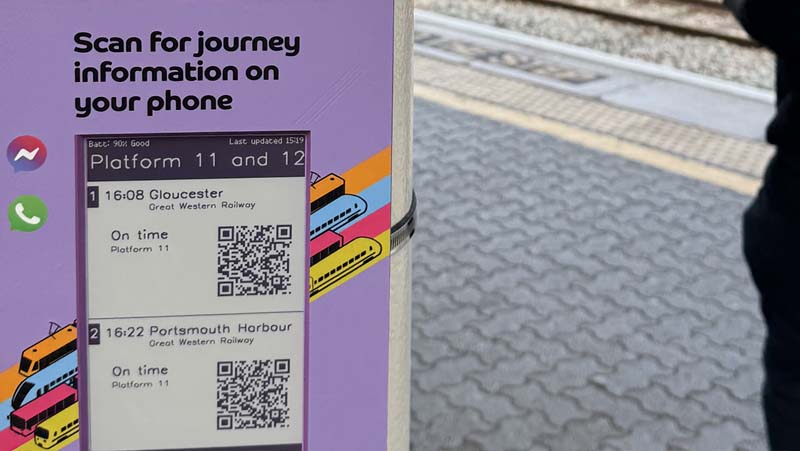
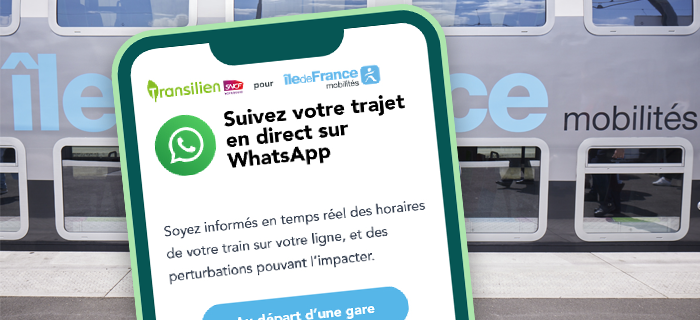
Rather than asking passengers to navigate a complex app interface, transport tool Journey Alerts delivers personalised, step-by-step journey instructions via WhatsApp,Messenger or SMS– platforms that, according to Ofcom's Online Nations Report 2025, are already used by 90% of UK online adults. There is no app to download, no account to register, and no dependence on sustained data access. During a journey, passengers receive alerts when to prepare to disembark, guidance around disruption, and real-time updates in plain language, when they need them.
The results reflect the positive impact accessible information has on the passenger’s experience. While only 23% of people continue to use typical journey planning apps, 98% of people keep using Journey Alerts. Eight out of ten users say they feel less stressed when travelling, and 85% report better journeys overall.
The Buddy feature was built around this need for additional support, as anxiety about travel is sometimes not only felt by the traveller. For carers, parents, and family members, not knowing whether someone has managed a connection or arrived safely is aparallel source of worry, as is making sure they are collected on time at the end of their journey. Journey Alerts Buddy automates journey updates to a nominated contact – removing the cycle of check-in calls and offering reassurance and useful updates on both sides of the journey.
Journey Alerts' Buddy feature could have prevented the following situation unfolding. An autistic young adult was travelling back to university in Sheffield when his train was delayed and disrupted. Without clear information about what was happening or what to do next, he became overwhelmed. He kept trying to contact his mother to explain where he was, but his phone battery died and he ended up stranded further north, in significant distress. The train operator eventually arranged a taxi to get him home.
Had Journey Alerts' Buddy feature it been in place, his mother would have received automatic updates throughout the journey, and both of them would have had a clearer picture of where he was and what was happening, without relying on his phone battery or his ability to communicate calmly under pressure.
As the government's Accessibility Roadmap for rail takes shape, the focus remains largely on physical infrastructure which is highly important work. Improving the passenger’s access to information about their journey, and supporting passengers who have a more psychological barrier to public transport will also play a large part in delivering better transport services in the UK.
For the people currently not making journeys because they cannot face the uncertainty of making them, the answer involves the right guidance, at the right moment –removing the guesswork before it becomes a reason to stay home.