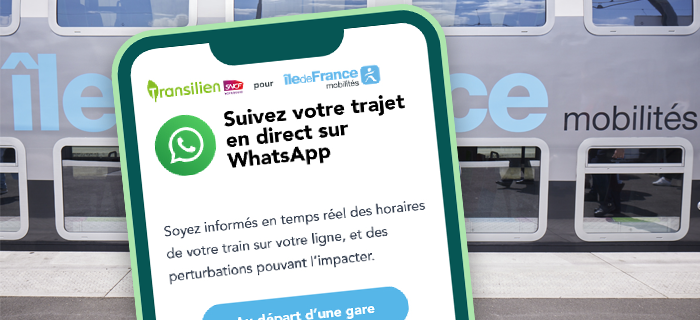
Journey Alerts launches in Paris, bringing real-time transport alerts to SNCF Transilien passengers
Updates


Journey Alerts' Digital Chaperone platform at Bristol Temple Meads
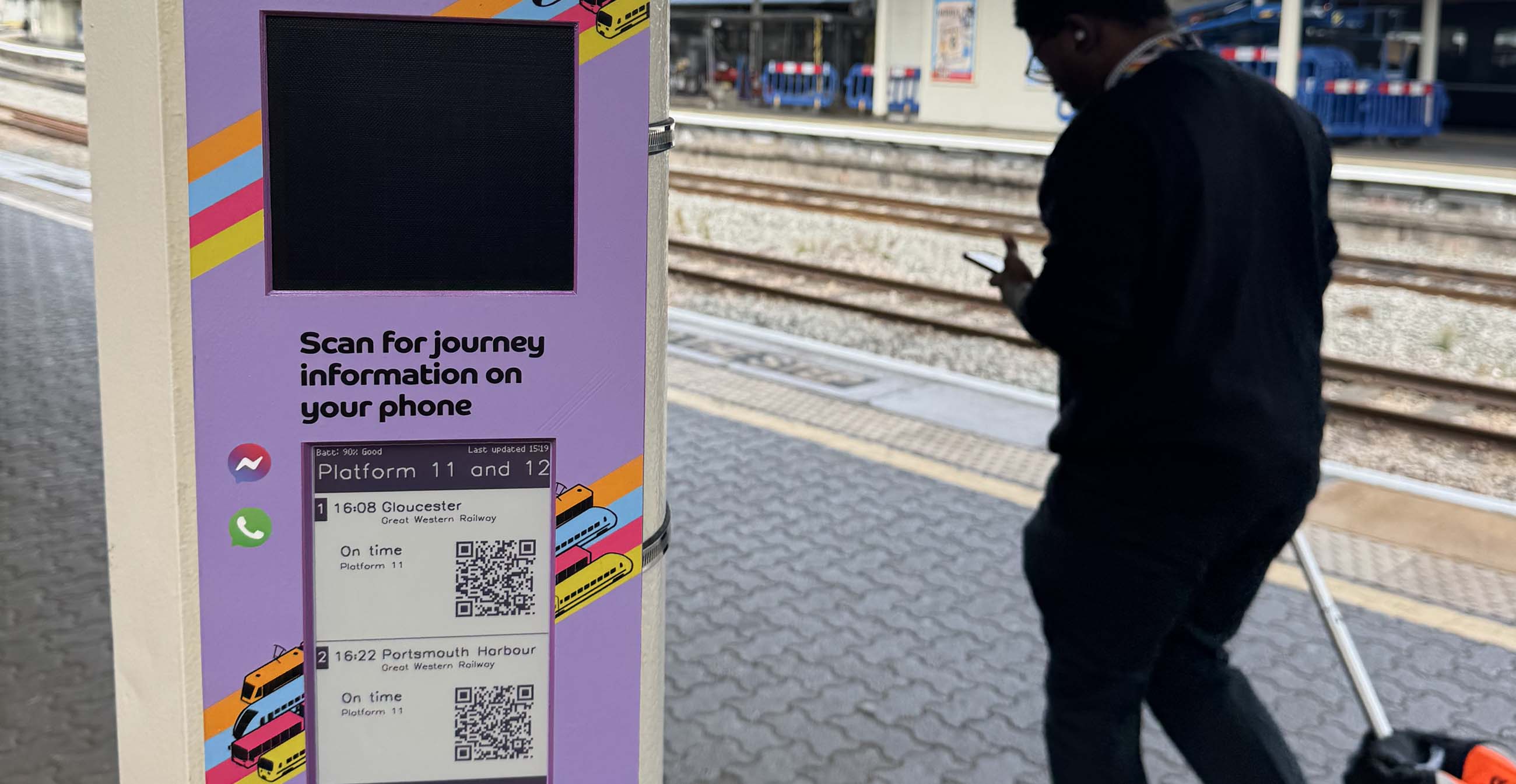
A trial of Journey Alerts' Digital Chaperone platform atBristol Temple Meads has shown that personalised messaging and customer supportcan be a major life-line to the 4.5 million people in the UK who avoid railtravel due to anxiety and non-physical disabilities.
The trial was conducted as part of the Station InnovationZone Programme, which is run by Connected Places Catapult in partnership withNetwork Rail and with support from Great Western Railways (GWR). The Digital Chaperone, or Buddy system, was used by 854 passengers across Bristol Temple Meads and Readingstations. Solar powered devices displaying real-time information and dynamic QR codes for access to train-specific support were deployed across Bristol platforms, which had significantly higher levels of use than posters at identical locations. Out of everyone who accessed support during the trials, 80% returned within a month and remained active users. Consistent sign-ups throughout the trial period demonstrated sustained passenger interest.
Staff at Bristol Temple Meads said that there are more than 200 anxious passengers per week needing ongoing support to navigate the station's platforms and infrastructure. Scaled across the UK network, 4.5million people avoid rail travel due to non-physical disabilities, which is a potential £72.4 billion annually in economic benefits.
Journey Alerts delivers personalised, step-by-stepjourney guidance via WhatsApp and SMS – platforms already used by 90% of UK online adults. During the trial, ticket window kiosks allowed staff to generate custom QR codes for any passenger, providing immediate personal instructions including onward travel from the station. Staff at the stations were equipped with QR code keyrings covering 20 popular destinations, enabling them to lead anxious passengers to the platform with continuous digital support once they moved beyond the ticket hall. This human-to-digital handover means passengers get face-to-face reassurance at the point of greatest anxiety, while the digitalplatform ensures that support doesn't end when staff step away – a model that scales without needing a staff member for every journey.
The platform's conversion performance improved significantly over the course of the trial. Early conversion rates of 2.5% prompted a redesign, shifting to a WhatsApp-first experience that drove average conversion to 22%. During periods of disruption, users doubled – a pattern consistent with the platform's wider performance, where sign-ups increase by 400% during disruption events.
Alex Froom, Chief Strategy Officer at Journey Alerts,said:
"The results at Bristol Temple Meads confirmed anxious passengers need clear, calm guidance which replicates the messaging that a trusted person would provide. The fact that 80% of users came back and kept using the service tells us that when people find something that reduces their travel anxiety, they hold on to it. The people who need this service most are not being reached by existing tools. We built Journey Alerts to work on platforms people already use and trust, and the Bristol trial showed that when you remove the friction, people engage and have better experiences using public transport."
Alan Peters, Rail Director, Connected Places Catapult:
"We are very pleased to see the growth Journey Alerts has achieved following its participation in the Station Innovation Zone programme. Its success shows the value of giving innovative, high-potential businesses the opportunity to test solutions in live rail environments and demonstrate their benefits to the industry. Journey Alerts is helping make rail travel more accessible and reassuring for passengers, which is exactly the kind of practical innovation the programme was designed to accelerate."
